
What Is Ijazah in Quran, its types, and Requirements
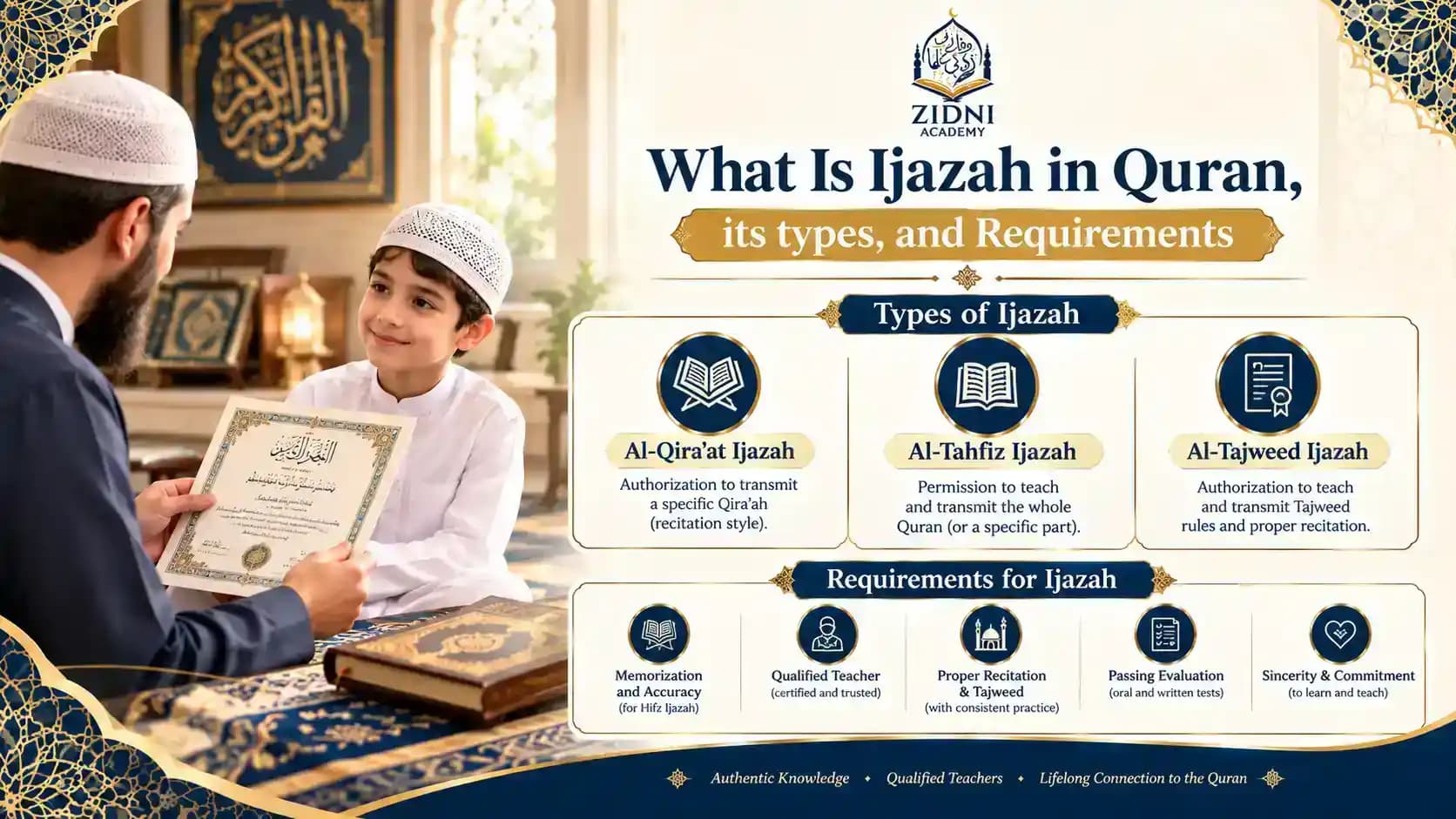
What Is Ijazah in Quran, its types, and Requirements
For Muslims in the UK, finding a genuine answer to what is Ijazah in Quran often means wading through scattered, inconsistent explanations online. An Ijazah is a formal, documented authorization confirming that a student's Quranic recitation has been verified against an authenticated chain of transmission back to the Prophet ﷺ, not simply a certificate of attendance. This guide covers what it actually means, the different types available, how to earn one, and how UK students specifically can pursue it without needing to travel abroad.
What Is Ijazah in Quran?
An Ijazah is a formal authorization granted by a qualified teacher, confirming that a student has mastered correct Quranic recitation according to Tajweed and that their recitation has been verified, word by word, against a documented chain of transmission (sanad) reaching back to the Prophet ﷺ. This is fundamentally different from a general course completion certificate.
What Does the Arabic Word "Ijaza" Mean?
The word Ijaza literally means "permission" or "authorization" in Arabic. In the context of Quranic study, it specifically means permission granted by a scholar to transmit what that scholar has taught you, exactly as you received it.
What Is Ijazah in Islam More Broadly?
Beyond Quran recitation specifically, the Ijazah system exists across Islamic scholarship generally, in Hadith transmission, Fiqh, and other traditional sciences, functioning as the historical method of verifying that knowledge passed from teacher to student remained accurate across generations. Quranic Ijazah is simply the most well-known and rigorously maintained branch of this broader tradition.
Does Ijazah Mean Degree?
Not in the academic sense. A university degree certifies coursework completion and general competency, while an Ijazah certifies a specific, verified, person-to-person transmission chain. Some scholars do describe it loosely as a "religious diploma," but the comparison only goes so far, since an Ijazah's authority comes entirely from the verified chain itself, not institutional accreditation.
Types of Ijazah
There are two primary paths, and understanding the difference matters before you commit to either one.
1. Ijazah in Quran Memorization (Hifz)
This certifies that a student has both memorized the entire Quran and can recite it flawlessly from memory, verified section by section by a qualified, sanad-holding teacher.
2. Ijazah in Quran Recitation (Tilawah) With Tajweed
This certifies flawless recitation according to Tajweed rules while reading directly from the Mushaf, without requiring full memorization. Most students pursue this path first, since it builds the Tajweed mastery that Hifz-based Ijazah depends on regardless.

Why Ijazah Is Important
An Ijazah formally authorizes you to teach Quranic recitation and, in many cases, to grant Ijazah to your own students eventually, continuing the chain forward. For many UK-based students specifically, it also represents the only way to access authentic scholarly certification without relocating to a country where sanad-holding teachers are more locally accessible.
The Conditions Required to Receive Ijazah
Earning an Ijazah requires flawless Tajweed applied consistently across the required material, genuine mastery rather than occasional accuracy, and successful completion of a final assessment conducted personally by a qualified, sanad-holding teacher. Sincerity of intention matters too; the process is treated as a serious trust (amanah), not a credential to collect casually.
How to Get an Ijazah in the Quran? Step-by-Step Guide
The path typically moves through three stages: a foundational Tajweed review confirming every rule is correctly applied, a full recitation phase where the required material is recited to your teacher verse by verse with corrections, and a final formal assessment confirming flawless recitation before the Ijazah is granted.
Tips That Help You Receive Ijazah
Consistent daily practice matters more than occasional intensive sessions, since Ijazah-level accuracy is built through steady, sustained repetition rather than cramming. Recording your own recitation and comparing it to your teacher's corrections between sessions accelerates progress considerably, and patience with the process itself, since rushing often means repeating sections that weren't genuinely solid.
Can I Receive Ijazah Online?
Yes, and for many UK students it's genuinely the only realistic option, given how few sanad-holding scholars are locally accessible outside major Muslim-majority countries. The verification process, a teacher hearing and correcting your recitation directly, works identically over video call as it does in person, since what matters is the teacher verifying every word themselves.
Six Steps to Get Ijazah Online
The realistic path online generally follows this sequence.
1. Learn the Basics of Quran Reading Online:
Arabic letter recognition and basic pronunciation, the foundation everything else builds on.
2. Learn Quran Recitation Online:
Reading full passages accurately and fluently.
3. Learn Tajweed Quran Online:
The detailed rules governing correct pronunciation, elongation, and stopping points.
4. Learn Ten Qira'at Online:
Optional for most students, but relevant for those pursuing certification across multiple traditional recitation styles.
5. Learn Quran Memorization Online:
Required specifically for a Hifz-track Ijazah, built on the Tajweed foundation already established.
6. Book Your Ijazah Assessment Online:
The final, formal verification session with your sanad-holding teacher.

How Long Does Earning an Ijazah Actually Take?
Most students complete the Recitation-based Ijazah path in six months to a year, depending on their starting Tajweed strength and how much of the required material they're already reciting confidently. A Hifz-based Ijazah naturally takes considerably longer, often several years, since it requires complete, flawless memorization verified in full before certification.
Why Rushing This Timeline Backfires
Students who try to compress this timeline by skipping foundational correction typically end up repeating entire sections during final assessment, since Ijazah verification doesn't allow for near-misses or inconsistent accuracy. A realistic pace, even if it feels slower, produces a genuinely solid result the first time through.
What Makes an Ijazah Different From Other Islamic Certifications
Unlike a general Islamic studies certificate, which typically confirms knowledge of Fiqh, Aqeedah, or Seerah, an Ijazah specifically and narrowly certifies recitation or memorization accuracy tied to a documented transmission chain. It doesn't certify broader religious knowledge, only the specific skill of accurately transmitting the Quran exactly as received.
This Narrow Focus Is Intentional
This narrow focus is precisely what gives an Ijazah its authority; diluting it into a broader "Islamic knowledge" credential would weaken the very thing that makes it meaningful, a verified, unbroken chain of accurate transmission stretching back fourteen centuries.
Zidni Academy's Online Ijazah Programme
At Zidni Academy, every teacher offering Ijazah certification holds their own authenticated sanad, verified before joining the platform, and is a native Arabic speaker with Al-Azhar training specifically in the rigour Ijazah-level correction demands.
Built for UK Students Specifically
Sessions are scheduled around UK time zones, removing the geographic barrier that keeps many otherwise serious students waiting years for a local option that may never materialise.
Meet the Teachers
Every teacher's chain of transmission is reviewed and confirmed before they're listed, since a teacher can only grant a chain they genuinely hold themselves. Full profiles, including specific sanad details, are available on the teachers page.
Building Toward Your Ijazah: Courses Along the Way
Most students begin with a beginner reading course to build genuine Arabic literacy before recitation-focused work starts in earnest.
Tajweed, Recitation, and Qira'at
From there, a dedicated Tajweed course builds the technical foundation Ijazah certification depends on entirely.
Students focused specifically on polished recitation often strengthen this further through a dedicated recitation course.
Those pursuing the Ten Qira'at path explore this through a dedicated Qira'at course.
For the Hifz-Based Ijazah Path
Students pursuing Ijazah in Hifz specifically build that foundation through a structured Quran memorisation course, pairing new memorization with the revision discipline flawless certification requires.
Comparing Your Options
What matters | Zidni Academy | Waiting for a Local Sheikh | Unverified Online Certificate |
|---|---|---|---|
Verified sanad chain | Yes, documented and reviewed | Depends entirely on availability | Rarely genuine |
Time to start | Immediate | Months to years, or never | Immediate but not authentic |
UK scheduling | Fully accommodated | Not applicable | Not applicable |
Free trial | Yes | Not applicable | Rarely offered |
Conclusion
Quick Recap: What Is Ijazah in Quran?
What is Ijazah in Quran ultimately comes down to one thing: a verified, documented connection to the Prophet ﷺ through your own recitation, confirmed personally by a qualified teacher rather than assumed from personal confidence alone. For UK students specifically, pursuing this online removes the single biggest barrier, geographic access to a genuine sanad-holder, without compromising the authenticity of what you ultimately earn.
Book Your Free Trial Session
The realistic path to an authentic Ijazah starts with a single conversation. Book a free trial session today, and your teacher will assess your current level and build a genuine timeline toward your Ijazah.
Frequently Asked Questions
Understanding the Certification
Can you get an Ijazah without a Sanad?
No, the sanad, the documented chain of transmission, is the actual substance of an Ijazah; a certificate without a verified sanad behind it isn't a traditional Ijazah, regardless of what it's labelled.
What is the difference between Ijazah and a general certificate?
A general certificate confirms course completion, while an Ijazah confirms verified, person-to-person recitation review tied to an authenticated chain reaching back to the Prophet ﷺ, a significantly more rigorous process.
How do I get an Ijazah specifically in Tajweed?
Complete foundational and advanced Tajweed training, then recite the required material directly to a sanad-holding teacher for correction and final formal assessment.
What are the different types of Ijazah?
The two primary types are Ijazah in Quran Recitation (Tilawah), certifying flawless Tajweed while reading, and Ijazah in Hifz, certifying flawless recitation from complete memorization.
Is an Ijazah in Quran recitation different from one in Quran memorization?
Yes, a Recitation Ijazah allows reading from the Mushaf during verification, while a Memorization Ijazah requires the entire required material to be recited entirely from memory.