
How to Improve Quran Recitation Voice: A Practical Guide
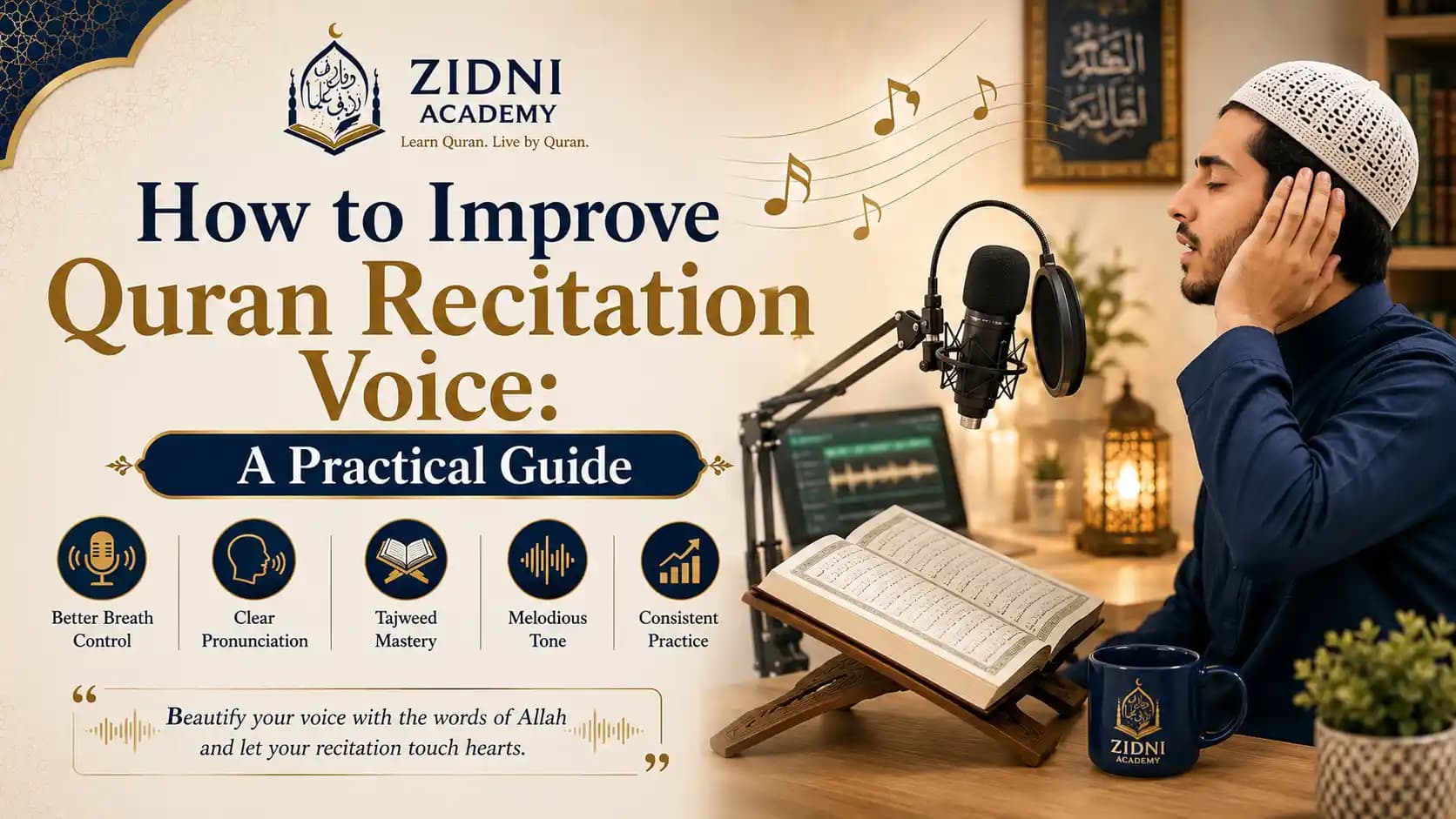
How to Improve Quran Recitation Voice: A Practical Guide
The Prophet ﷺ said, "Beautify the Quran with your voices," which means learning how to improve Quran recitation voice isn't vanity, it's following a direct instruction. Yet most guides jump straight to vocal tricks while skipping the actual foundation: correct Tajweed, breath control, and consistent practice. This guide covers what genuinely works, from breathing technique to the melodic scales known as Maqamat, and where a qualified teacher makes a difference no app or video can replace.
Why Your Recitation Voice Actually Matters
Beautifying your voice while reciting isn't about performance or showing off, it's about honoring the words themselves. A recitation that flows with the right pauses, pace, and emotional depth draws the listener, including yourself, deeper into the meaning of what's being recited, rather than letting the words pass by unnoticed.
That said, correctness always comes before beauty. A stunning voice reciting with pronunciation errors still changes meaning incorrectly, which matters far more religiously than melody ever could. Every technique in this guide assumes your Tajweed is already solid, since voice training layered on top of incorrect pronunciation just makes the mistakes more polished, not less present.
How to Improve Quran Recitation Voice: Start With Tajweed
Perfecting Tajweed is the non-negotiable foundation everything else builds on. Tajweed governs correct pronunciation, letter articulation points, and the rules that preserve both the meaning and the natural rhythm of the words as they were revealed.
Why Voice Training Without Tajweed Backfires
Working on vocal beauty before Tajweed is solid is like decorating a crooked frame, the flaws just become more noticeable, not less. A teacher correcting your Tajweed first ensures every breathing and modulation technique that follows actually improves something structurally sound, rather than dressing up mistakes that need fixing at the root.
Breath Control: The Engine Behind Your Voice
Your breath powers everything about how your recitation sounds, and shallow chest breathing is the most common reason reciters run out of air mid-verse or strain their voice unnecessarily. Breathing deeply from the diaphragm, the muscle beneath your lungs, gives you a much larger reserve of air than breathing from the chest alone.
Practice reciting a single verse in one breath, gradually extending the length as your control improves. This single exercise strengthens the diaphragm and teaches you to manage airflow efficiently, which directly translates into smoother, less strained recitation over time, especially with longer verses.
Vocal Warm-Up Exercises Before You Recite
Just like an athlete warms up before exercise, your voice benefits from a few minutes of preparation before reciting. The siren exercise, sliding your voice smoothly from your lowest note to your highest, warms up your vocal range and stretches the vocal cords gently.
Lip trills relax facial muscles and improve breath flow, while simple vowel warm-ups, gliding through "Aa," "Ee," and "Oo" sounds, build clarity and articulation. Drinking water before and during practice keeps your vocal folds clear, and warming up consistently reduces the risk of strain, particularly if you recite for extended periods.
Understanding Maqamat: The Melodic Scales of Recitation
Maqamat are traditional melodic scales used in Quranic recitation, and while mastering them fully is an advanced skill, understanding the concept opens your ear to why skilled reciters sound the way they do. Each Maqam carries a distinct emotional tone, some suited to verses of mercy, others to verses describing power or warning.
You don't need to master Maqamat to improve your voice, but recognizing them when you listen to reciters helps you understand what you're actually hearing, rather than just enjoying a pleasant sound without knowing why it works.

Voice Modulation: Pitch, Pace, and Emphasis
A flat, monotone recitation loses listeners quickly, no matter how technically correct it is. Effective modulation means slightly emphasizing key words or phrases without overdoing it, lowering pitch and volume during longer verses, and raising it gently when reciting verses describing Allah's power or the description of Paradise.
Pausing briefly at commas and stopping fully at natural stops gives your recitation genuine rhythm, while varying your pace, never too fast, never dragging, reinforces meaning rather than working against it. These aren't performance tricks; they're what separates recitation that's technically correct from recitation that actually moves the listener.
Listening to Skilled Reciters the Right Way
Choose a short passage and listen to it repeatedly from a reciter whose style resonates with you. Close your eyes and focus not just on the words, but on tone, pauses, melody, and the emotion carried in their voice, since passive listening teaches your ear far less than active, focused listening does.
Pay attention specifically to where they pause, how they transition between verses, and how their pitch rises and falls with the meaning of the text. This kind of focused listening trains your ear to recognize good technique, which naturally starts influencing your own recitation over time.
Recording Yourself for Real Feedback
Recording your own recitation and listening back critically reveals gaps you simply can't hear while reciting in the moment. Use a decent quality microphone, listen multiple times, and note specifically where your voice shakes, where pronunciation slips, or where pacing feels off.
Save recordings over several weeks so you can genuinely compare progress rather than relying on a vague feeling of improvement. This habit, more than almost any other on this list, turns vague self-assessment into concrete, trackable progress you can actually measure.
When to Practice: Timing Matters More Than You'd Think
Your voice is naturally freshest and clearest early in the day, which is why many experienced reciters prefer practicing after Fajr or before Maghrib rather than late at night when the voice is tired from a full day of talking. Practicing at a consistent time also builds a routine your voice adapts to, similar to how athletes train at the same time to build consistency.
Building a Sustainable Daily Habit
Short, focused sessions of fifteen to twenty minutes daily produce far better results than occasional hour-long sessions, since your vocal cords need regular, moderate use to strengthen rather than sudden intense strain followed by long breaks. Consistency, more than any single technique in this guide, is what actually transforms a recitation voice over months of practice.
The Spiritual Dimension of a Beautiful Voice
Reciting the Quran is described as a conversation with Allah, and the desire to beautify your voice for that conversation is itself considered an act of worship, not vanity or performance. This framing matters practically too, since approaching voice training as worship rather than self-improvement tends to sustain motivation through the inevitable weeks where progress feels slow.
Sincerity in intention doesn't replace technique, but it does change how practice feels day to day. Reciters who frame their training this way often report enjoying the process itself rather than treating it as a chore to get through before reaching some future goal.
Common Mistakes That Damage Your Voice
Straining your voice by reciting too loudly or too fast, particularly without warming up first, is the most common cause of vocal fatigue among frequent reciters. Relying on the throat alone instead of supporting sound from the chest and diaphragm also strains the voice unnecessarily over time.
Skipping hydration, especially during longer practice sessions, dries out the vocal folds and makes strain far more likely. And reciting for hours without breaks, rather than shorter, focused sessions, tends to produce diminishing returns while increasing the risk of genuine vocal injury.
Recitation Style vs Singing: An Important Distinction
Beautifying your voice for recitation is fundamentally different from singing, even though some techniques overlap. Recitation follows Tajweed rules strictly, which means melody and modulation must work within those boundaries rather than overriding them for dramatic effect the way a song might.
This distinction matters because chasing vocal beauty without respecting Tajweed rules can drift into altering pronunciation for melodic effect, which crosses from beautification into distortion of the actual words. A knowledgeable teacher helps you find genuine beauty within correct boundaries, rather than sacrificing accuracy for a more impressive-sounding recitation. You can review teacher backgrounds and specialisms on the Zidni Academy teachers page before booking a session.
Meet the Teachers
At Zidni Academy, every teacher is a native Arabic speaker, and most are graduates of Al-Azhar University, with specific experience correcting both Tajweed and recitation style for non-native speakers. Sessions are one-to-one, so a teacher can identify exactly where your voice strains, where your pacing rushes, and where your Tajweed needs work, feedback no app or recorded course can replicate.
Courses to Build a Stronger Recitation Voice
Since Tajweed is the foundation everything else depends on, a dedicated Tajweed course is the natural starting point for anyone serious about improving their recitation voice.
Advanced Recitation and Qira'at
For students who've mastered the basics and want to explore recitation styles and melodic depth further, the Quran Qira'at course covers different recitation styles in real depth.
Students focused on building consistency through daily practice often pair this with a structured Quran memorisation course, since regular recitation of memorized material is itself excellent voice training.
Getting Started the Right Way
How to Improve Quran Recitation Voice as a Complete Beginner
Starting From Zero Without Feeling Overwhelmed
If you're just beginning, focus entirely on correct Tajweed and comfortable breathing before worrying about melody or modulation at all. Beginners often try to sound like advanced reciters too early, which tends to strain the voice and reinforce sloppy pronunciation habits that are harder to unlearn later.
A structured beginner recitation course paces this progression properly, building correct fundamentals first so that voice training layers onto a genuinely solid foundation rather than papering over gaps.
Comparing Your Options
What matters | Zidni Academy | Self-Study with Apps | Generic Online Course |
|---|---|---|---|
Live Tajweed correction | Yes, every session | No | Sometimes |
Personalized voice feedback | Yes, one-to-one | No | Rarely |
Maqamat and style guidance | Available on request | Not available | Rarely covered |
Free trial | Yes | Not applicable | Rarely offered |
Frequently Asked Questions
How long does it take to improve Quran recitation voice noticeably?
Most students notice a clearer, more controlled voice within four to six weeks of consistent breathing exercises and warm-ups, while genuine melodic depth through Maqamat awareness typically develops over several months of focused practice.
Do I need a naturally beautiful voice to recite well?
No, technique matters far more than natural talent; correct breathing, Tajweed, and consistent practice improve any voice significantly, and many reciters admired for their voices built that skill through years of deliberate training.
Technique Questions
Can vocal warm-ups actually prevent voice strain?
Yes, warming up increases blood flow to the vocal folds and loosens surrounding muscles, which measurably reduces strain and fatigue during longer recitation sessions compared to reciting cold.
Is it necessary to learn Maqamat to recite beautifully?
No, understanding the concept helps you appreciate and imitate what skilled reciters do, but solid Tajweed and natural voice modulation alone already produce a genuinely beautiful, moving recitation.
Tracking Progress Without Getting Discouraged
Voice improvement rarely feels linear. Some weeks bring noticeable gains, others feel stagnant despite consistent practice, and that's a normal part of vocal training rather than a sign something's wrong. Comparing recordings a month apart, rather than day to day, gives a far more accurate picture of real progress.
Setting Realistic Milestones
Rather than chasing a vague goal like "sound beautiful," set specific, trackable milestones: completing a verse in one breath, reciting a full page without pitch strain, or receiving positive feedback from a teacher on a specific Surah. These concrete markers keep motivation steady even during the inevitable plateaus every reciter experiences, and they give a teacher something specific to work on with you each session rather than a vague, hard-to-measure goal.
For beginners specifically still building foundational reading confidence alongside voice training, a beginner Quran reading course pairs well with vocal practice, since reading fluency and comfortable, confident recitation reinforce each other directly.
Book Your Free Trial Session
The fastest way to know exactly what's holding your recitation back is to have a qualified teacher listen directly. Book a free trial session and get personalized feedback on your Tajweed, breathing, and voice.