
How to Learn the Arabic Alphabet: A Clear Path for Absolute Beginners
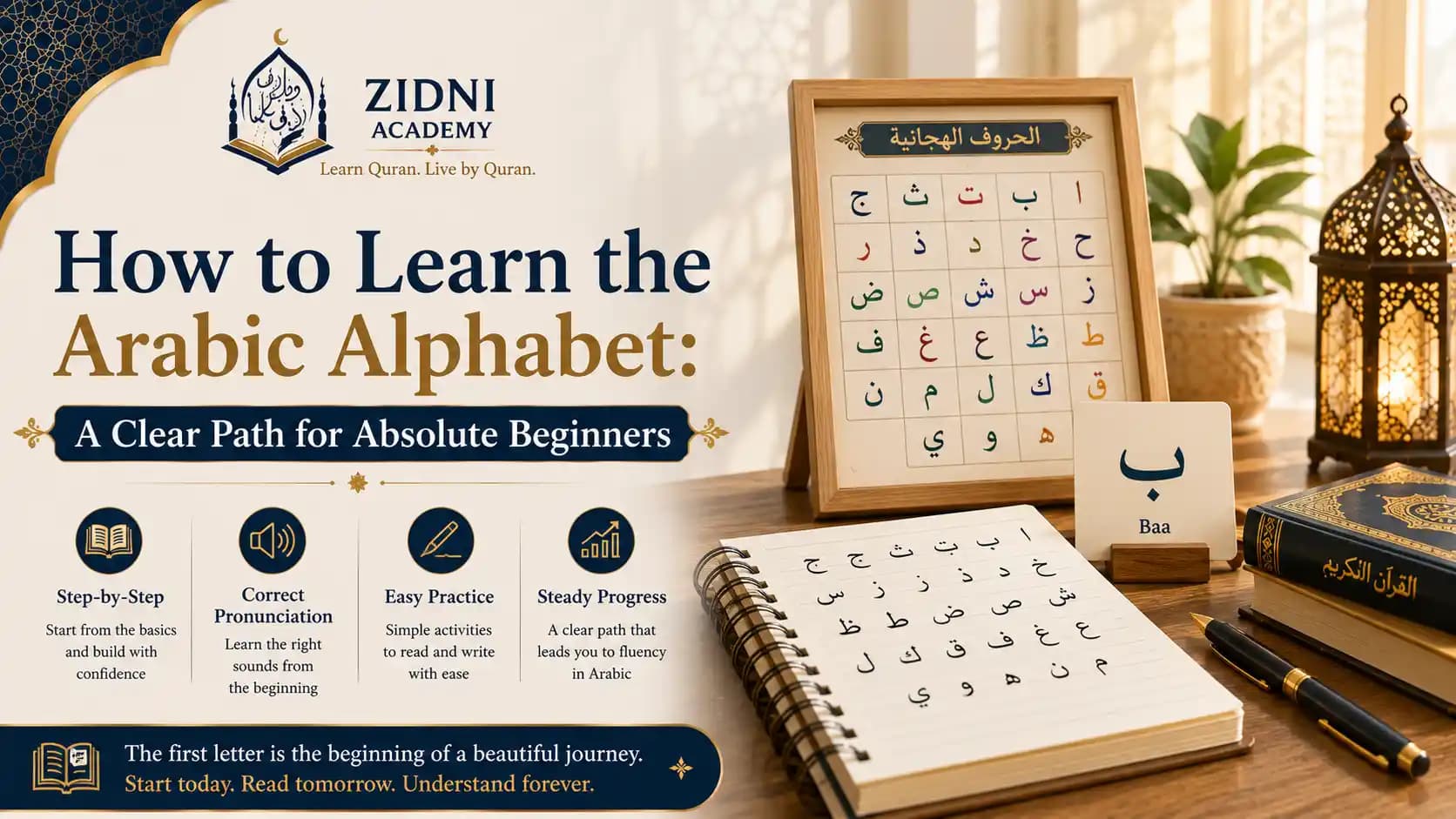
How to Learn the Arabic Alphabet: A Clear Path for Absolute Beginners
Staring at Arabic script for the first time, most people assume it's simply unreadable, a flowing line of unfamiliar shapes with no obvious starting point. Learning how to learn the Arabic alphabet is far more approachable than it looks, and it doesn't require memorizing all 28 letters at once or guessing your way through pronunciation. This guide breaks the process into a genuine sequence, covering letter shapes, sounds, vowels, and the practice habits that actually make the alphabet stick.
Why the Arabic Alphabet Feels Hard at First
Arabic reads right to left, which alone disorients most English speakers for the first few weeks. Add to that a script where most letters connect fluidly to their neighbours, changing shape depending on position in a word, and it's easy to see why beginners feel overwhelmed before they've even learned a single sound.
It's Unfamiliar, Not Actually Difficult
The genuine difficulty is lower than it feels initially. Arabic has 28 letters, all consonants, with a logical, consistent system once you understand how shapes shift by position. The unfamiliarity, not real complexity, is what makes the first week feel harder than it actually is.
The 28 Letters and Four Shapes Each Can Take
Every Arabic letter can appear in up to four forms: isolated, at the start of a word, in the middle, and at the end, depending on whether it connects to the letters around it. Six letters specifically never connect to the letter that follows them, which breaks the flowing line and actually makes those words easier to segment visually once you notice the pattern.
This shape-shifting is the single biggest source of early confusion, but it follows fixed, learnable rules rather than being random. Once a learner sees the pattern, usually after working through a handful of real words, the four-shape system stops feeling like four separate letters to memorize and starts feeling like one letter with predictable variations.
How to Learn the Arabic Alphabet Step by Step
There's a genuine order that works better than jumping around randomly between letters.
Start With the Isolated Form of Each Letter
Learn each letter's standalone shape and sound first, before worrying about how it changes within words. This gives you a stable mental anchor for each letter that the connected forms can build on later, rather than trying to learn all four shapes simultaneously from day one.
Group Similar-Looking Letters Together
Letters like ب (baa), ت (taa), and ث (thaa) share the same basic shape, differing only in the number and placement of dots above or below. Learning these visually similar groups together, rather than in strict alphabetical order, helps you notice the small distinguishing details that actually matter for reading accurately.
Move to Connected Forms Only After Isolated Forms Feel Solid
Once the isolated shapes and sounds feel automatic, start reading short, real words that show each letter in its connected forms. This is where the four-shape system actually clicks, since seeing a letter change shape in context makes far more sense than memorizing shape charts in isolation.
Vowels: The Part Most Guides Skip Too Quickly
Arabic vowels work differently from English ones, and this trips up more learners than the consonants do. There are three long vowels, alif, waw, and yaa, which are written directly into words and clearly visible. Short vowels, by contrast, are usually left out of everyday writing entirely, shown only through small marks called harakat in beginner texts, the Quran, or children's books.
This means fluent readers are often filling in short vowel sounds from context and prior vocabulary knowledge, not from what's literally printed on the page. For a beginner, this is genuinely disorienting at first, but it's exactly why practicing with vowelled beginner texts before moving to unvowelled adult text matters so much.
Practice Techniques That Actually Work
Flashcards with the letter, its name, and a sample word work well for initial memorization, particularly with spaced repetition rather than one long cramming session. Writing each letter by hand repeatedly, in all four of its shapes, builds muscle memory that passive recognition alone doesn't create.
Audio Is Non-Negotiable
Listening to native pronunciation for every letter, especially sounds that don't exist in English like ع (ayn) or ق (qaf), prevents beginners from silently mispronouncing letters for months without realizing it. Reading along with audio, rather than reading silently, catches this gap early rather than letting it become a habit.
Sun Letters and Moon Letters: A Small Rule Worth Knowing Early
Arabic letters split into two groups, "sun letters" and "moon letters," which affects how the definite article "al-" (the) is pronounced before a word. Before moon letters, "al-" is pronounced clearly as written. Before sun letters, the "l" sound disappears and the following letter doubles instead, even though the spelling stays the same.
This rule feels like a strange detour when you're still learning individual letter shapes, but recognizing it early prevents a specific, common mispronunciation that many self-taught learners carry for years without anyone correcting it. It doesn't need to be mastered immediately, just noticed as a pattern that will make more sense once basic reading feels comfortable.
Should You Learn Modern Standard Arabic Letters or a Dialect First?
The alphabet itself doesn't change between Modern Standard Arabic and spoken dialects, the same 28 letters and shapes apply everywhere. What differs is vocabulary and some pronunciation conventions once you move beyond the alphabet stage into actual words and sentences.
Why This Matters Less Than Beginners Assume
This means the alphabet-learning stage is identical regardless of your eventual goal, whether that's classical texts, the Quran, or everyday conversation in a specific dialect. The fork in the road comes later, once you're building vocabulary and grammar, not during alphabet study itself, which is genuinely reassuring for beginners worried about picking the "wrong" starting point.
Common Mistakes Beginners Make
Trying to memorize all 28 letters and their four shapes in one sitting overwhelms most learners and produces shallow, quickly-forgotten recognition rather than genuine mastery. Skipping vowel practice because it feels like an advanced topic is another frequent mistake, since vowels are actually essential from the very first real word a learner attempts to read.
Relying entirely on an app without ever writing letters by hand slows down genuine recognition speed, since the physical act of writing reinforces letter shapes in a way that tapping a screen doesn't replicate.
Arabic Numbers: A Small Bonus Worth Learning Alongside Letters
Arabic numerals, the digits used for counting, are worth learning alongside the alphabet, since they follow their own distinct shapes separate from the letters themselves. Interestingly, the "Arabic numerals" used in English (0-9) actually originated from a different numeral system historically, while the numerals used in Arabic-speaking countries today look genuinely different and are worth recognizing early, especially for reading prices, dates, or page numbers in Arabic material.
The Arabic Script's Reach Beyond Arabic Itself
It's worth knowing that the Arabic script isn't used exclusively for the Arabic language; Persian, Urdu, and several other languages use adapted versions of the same alphabet with a few additional letters. This means the effort invested in learning Arabic letters carries over partially into recognizing script used across a much wider linguistic region than Arabic alone.
How to Stay Motivated Through the First Few Weeks
The first two weeks of learning any new script tend to feel the most discouraging, since progress is genuinely slow before pattern recognition kicks in. Setting a small, specific daily target, five new letters, ten minutes of writing practice, rather than a vague goal like "study Arabic today," makes consistency far easier to sustain during this stretch.
Tracking Small Wins Keeps Momentum Going
Keeping a simple log of letters mastered, even a basic checklist, gives a visible sense of progress that combats the feeling of stagnation many beginners report in week one or two. For learners specifically motivated by faster overall progress, a guide on learning Quran fast and easy covers pacing principles that apply well beyond religious reading alone.
How to Learn the Arabic Alphabet Without Getting Stuck at Recognition
Recognizing letters is only the first stage; the real goal is reading connected words fluently, which requires deliberate practice beyond flashcards alone. A structured Noorani Qaida course takes a learner from isolated letters through connected reading in a proven, sequential order, rather than leaving that transition to guesswork.
Meet the Teachers
At Zidni Academy, every teacher is a native Arabic speaker, with specific experience teaching absolute beginners who've never seen Arabic script before. Sessions are one-to-one, so a teacher catches a mispronounced letter in the exact moment it happens, something no app or flashcard deck can do.
Courses to Build On Your Alphabet Foundation
Once the alphabet feels solid, learners generally split into two paths depending on their goal. For conversational fluency, the Egyptian Arabic course builds directly on alphabet knowledge toward real spoken vocabulary and conversation.
For Religious and Quranic Reading
For learners whose goal includes reading the Quran, beginner Islamic and Arabic classes combine alphabet mastery with the specific pronunciation accuracy Quranic reading requires, going beyond general literacy alone.
Comparing Your Options
What matters | Zidni Academy | Apps and Flashcards Alone | Self-Taught from a Book |
|---|---|---|---|
Live pronunciation correction | Yes, every session | No | No |
Structured letter sequence | Yes, proven order | Often random or gamified | Varies by book |
Vowel training included | Yes, from the start | Sometimes skipped | Depends on book |
Free trial | Yes | Not applicable | Not applicable |
Book Your Free Trial Session
The fastest way to move past flashcards and actually start reading is live correction from day one. Book a free trial session and get personalized guidance through the alphabet with a native Arabic teacher.
Frequently Asked Questions
How long does it take to learn the Arabic alphabet?
Most motivated learners recognize all 28 letters and their basic shapes within two to four weeks of consistent daily practice, though comfortable, fluent reading of connected words typically takes several months longer.
Is it harder to learn Arabic letters than other non-Latin scripts?
Not inherently; the connected, position-based shape system is unfamiliar to English speakers but follows consistent, learnable rules, similar in learning curve to other non-Latin alphabets like Russian or Greek.
Do I need to learn calligraphy to write Arabic well?
No, standard handwriting is sufficient for everyday reading and writing; calligraphy is a separate, more advanced art form entirely optional for general literacy.
Can I skip vowels entirely and still read Arabic?
Not effectively as a beginner; while advanced readers often infer short vowels from context, beginners genuinely need vowelled texts to build accurate reading habits before moving to unvowelled adult material.