Islamic Books Stories of the Prophets: A Complete Guide for Muslim Children in the USA and UK
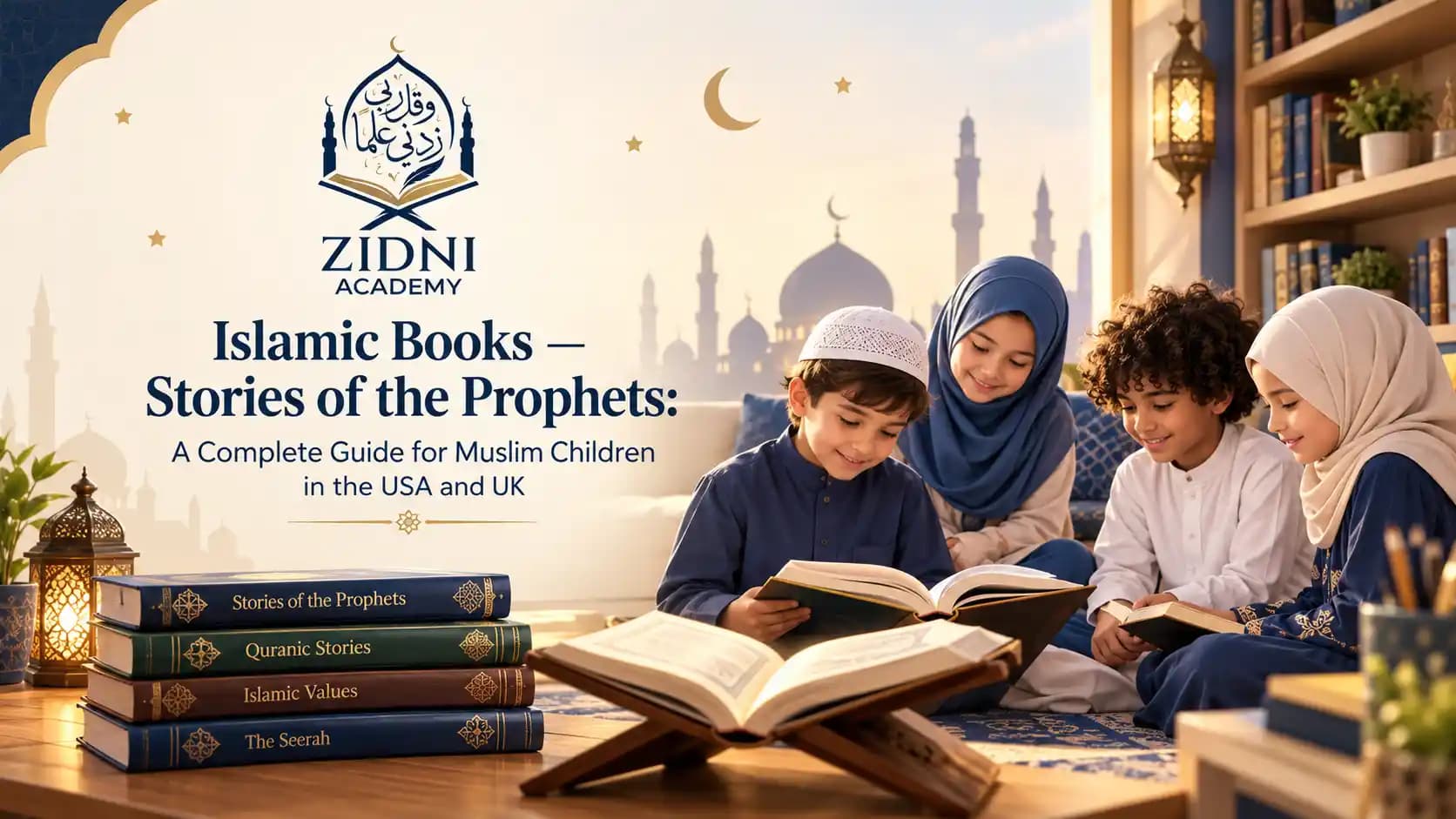
Islamic Books Stories of the Prophets: A Complete Guide for Muslim Children in the USA and UK
Finding good islamic books stories of the prophets can help children discover the lives, struggles, patience, faith, and character of the Prophets in a way they can understand and remember. For Muslim families in the USA and UK, the challenge is not simply finding a book—it is choosing stories that are appropriate for a child's age and connected to reliable Islamic sources.
This guide explains the main types of books available, important stories from the Quran, the story of Prophet Muhammad ﷺ, Prophet Yusuf عليه السلام, and how parents can turn story time into meaningful Islamic learning.
Why Stories of the Prophets Matter for Children
Children naturally respond to stories.
A child may forget a list of Islamic principles, but remember how Prophet Yusuf عليه السلام remained patient, how Prophet Musa عليه السلام faced Pharaoh, or how Prophet Ibrahim عليه السلام stood firmly for tawheed.
The Quran itself presents prophetic stories as sources of reflection and lessons. Surah Yusuf concludes by describing these accounts as lessons and guidance rather than invented stories.
For children, the goal should therefore be more than finishing a book. A good prophetic story should help them ask:
- What did this Prophet believe?
- What challenge did he face?
- How did he respond?
- What can I learn from his character?
- How can I apply that lesson at home or school?
This makes stories of the prophets particularly valuable for Muslim children growing up in the USA and UK.

What Are Islamic Books About the Stories of the Prophets?
Islamic books about the Prophets are books that present the lives and experiences of Allah's Prophets and Messengers from an Islamic perspective.
Some books focus on individual Prophets, such as:
- Prophet Yusuf عليه السلام
- Prophet Ibrahim عليه السلام
- Prophet Musa عليه السلام
- Prophet Nuh عليه السلام
- Prophet Yunus عليه السلام
- Prophet Isa عليه السلام
- Prophet Muhammad ﷺ
Other books collect many stories from the Quran and present them together.
One well-known classical work is Stories of the Prophets by Ibn Kathir, commonly known as Qasas al-Anbiya. English editions available in the UK and USA present accounts of many Prophets and are generally intended for a wider audience, including families and students.
For younger children, however, parents may prefer shorter books with simpler vocabulary, larger text, illustrations, or one Prophet per story. Current children's collections in the UK include both individual Prophet storybooks and multi-book sets designed specifically for young readers.
Is There a Book About the Stories of Prophets in Islam?
Yes. There are many Islamic books about the Prophets, ranging from classical scholarly compilations to simplified children's storybooks.
One of the best-known titles is Stories of the Prophets by Ibn Kathir. English editions describe the lives of Prophets from Adam عليه السلام through later Prophets, with material drawn from the Quran and Hadith.
There are also books specifically designed for children.
For example, children's Prophet collections available in the UK may use short individual stories, large text, and illustrations to make the material easier for younger readers.
Parents should remember one important point:
Not every children's storybook has the same level of source detail.
A beautifully illustrated book can be useful for introducing a child to a Prophet, while a more detailed book may be better for older children. Parents should also check whether a story distinguishes Quranic information from additional storytelling.
What Are Some Examples of Islamic Stories About Prophets?
Some of the most useful stories for children come directly from the Quran.
Prophet Adam عليه السلام
The story of Adam teaches children about creation, obedience, repentance, and the consequences of disobedience.
For younger children, parents can focus on the idea that making a mistake does not mean giving up. Adam عليه السلام turned back to Allah and sought forgiveness.
Prophet Nuh عليه السلام
The story of Nuh عليه السلام introduces children to patience and perseverance.
He continued calling his people to Allah despite rejection. For a child, this can become a practical lesson about doing what is right even when friends do not immediately agree.
Prophet Ibrahim عليه السلام
Ibrahim عليه السلام is particularly important for teaching children about tawheed.
His story includes his rejection of idol worship, his trust in Allah, and his willingness to obey Allah.
Parents can connect the story to a simple question:
“Why do Muslims worship Allah alone?”
Prophet Musa عليه السلام
The story of Musa عليه السلام includes courage, reliance upon Allah, and the confrontation with Pharaoh.
For children, the story can be divided into smaller lessons rather than presented as one long historical narrative.
Prophet Yusuf عليه السلام
The nabi Yusuf story is especially suitable for discussing jealousy, family relationships, hardship, forgiveness, patience, and Allah's wisdom.
Because Surah Yusuf tells the story in a continuous narrative, it can also be an excellent family reading project.
Prophet Muhammad ﷺ
Children should also learn the story of Muhammad ﷺ through age-appropriate Seerah.
Rather than presenting the Seerah only as a list of dates and battles, parents can introduce children to his honesty, mercy, patience, family life, worship, and treatment of others.
A structured Seerah program can later help children move from short stories to a more organized understanding of the Prophet's life. Zidni Academy's Al-Seerah Al-Nabawiyyah course, for example, presents the Prophet's life through structured lessons taught by certified Al-Azhar scholars.

The Nabi Yusuf Story: Why Children Remember It
The nabi Yusuf story has many elements that naturally engage children:
- A loving family.
- Jealousy between brothers.
- Separation from his family.
- Difficult circumstances.
- Prison and hardship.
- Patience and trust in Allah.
- A change in circumstances.
- Reunion with his family.
- Forgiveness.
The most important part for children is not simply knowing what happened.
Ask them:
“What did Yusuf عليه السلام do when life became difficult?”
This turns story time into reflection.
Older children can also compare Yusuf's response to jealousy and hardship with situations they experience at school, with siblings, or among friends.
Which Islamic Books Were Given to the Prophets?
This question needs a careful distinction because Islamic sources mention several revealed scriptures.
The Quran explicitly mentions the Torah and the Gospel, and it identifies the Zabur as being given to Prophet Dawud عليه السلام.
The Quran also refers to the scriptures of Ibrahim عليه السلام and Musa عليه السلام.
A simple explanation for older children is:
Scripture | Prophet associated with it |
|---|---|
Tawrah (Torah) | Musa عليه السلام |
Zabur (Psalms) | Dawud عليه السلام |
Injil (Gospel) | Isa عليه السلام |
Quran | Muhammad ﷺ |
Scriptures of Ibrahim | Ibrahim عليه السلام |
Scriptures of Musa | Musa عليه السلام |
The Quran describes itself as a revelation in truth that confirms what came before it, while also mentioning the Torah and Gospel as revelations from Allah.
For children, it is usually better to teach this as part of a broader lesson about revelation, Prophethood, and belief in Allah's messengers, rather than presenting it as a disconnected memorization table.
Stories From the Quran vs. Made-Up Children's Stories
This is one of the most important considerations when choosing islamic books stories of the prophets.
Children's books sometimes simplify historical narratives to make them easier to read. That can be helpful, but parents should distinguish between:
- What the Quran explicitly states
- What authentic Hadith establishes
- Scholarly explanations
- Historical reports
- Literary additions used to make a story more dramatic
This matters because prophetic stories are not ordinary fictional stories.
For example, classical editions of Ibn Kathir's Stories of the Prophets are presented as compilations based on Quranic material and Hadith, while children's books may use a much shorter and more simplified format.
A useful rule for parents is:
The younger the child, the simpler the presentation can be—but the core facts should remain reliable.
How to Choose Islamic Books About the Prophets for Children
Before buying a book, ask six questions.
1. Is the language appropriate for the child's age?
A four-year-old does not need a 500-page scholarly history.
A twelve-year-old may need more detail than a picture book can provide.
2. Does the book identify reliable sources?
Look for books that explain whether their content comes from the Quran, Hadith, or established Islamic scholarship.
3. Does the story teach more than entertainment?
A good children's book should leave the child with a lesson.
4. Are the illustrations age-appropriate?
Visual presentation matters for young readers, but parents may have different preferences regarding how Prophets and sacred figures should be represented. Checking the book before giving it to a child is therefore important.
5. Does the book encourage questions?
The best family reading sessions do not end when the page ends.
Ask the child what surprised them, what they learned, and what they would do in a similar situation.
6. Does the book match the child's Islamic knowledge?
A child who has never studied basic Islamic concepts may benefit from short stories and simple vocabulary before moving to longer classical works.
The Simple Seerah: Where Should Children Begin?
Many parents search for the simple seerah because they want their children to know the Prophet Muhammad ﷺ without overwhelming them with a large historical text.
A simple Seerah approach can begin with:
- His birth and early childhood.
- His reputation for honesty.
- The beginning of revelation.
- His call to Islam.
- The challenges faced in Makkah.
- The Hijrah.
- Life in Madinah.
- His treatment of family and companions.
- Important events from his mission.
- His final days and lasting legacy.
The key is progression.
Young children can begin with short stories about his character, while older children can gradually study chronology, major events, and authentic source material.
This is also where a structured Islamic Studies program can complement home reading. Zidni Academy's Islamic Studies Courses for Kids specifically includes stories of the Prophets and the Seerah of Prophet Muhammad ﷺ while connecting Islamic values to children's everyday lives.
How to Read Stories of the Prophets With Your Child
You do not need an hour every night.
Try a simple 10–15 minute routine.
Step 1: Read one short section
Choose one event rather than trying to finish an entire Prophet's story.
Step 2: Ask one comprehension question
For example:
“Why did Yusuf عليه السلام remain patient?”
Step 3: Ask one reflection question
“What can we do when someone treats us unfairly?”
Step 4: Connect the lesson to real life
If the story is about honesty, discuss honesty at school.
If it is about patience, discuss waiting without complaining.
If it is about forgiveness, discuss sibling disagreements.
Step 5: Let your child retell the story
This is especially useful for younger learners.
When a child can explain the story in their own words, the lesson becomes much more memorable.

Should Children Only Read Books About the Prophets?
Books are an excellent starting point, but they do not have to be the entire learning method.
A child may read the story of Yusuf عليه السلام and still have questions about:
- Why did Allah test him?
- What does tawakkul mean?
- What does the Quran say about the story?
- Which parts are explicitly mentioned in the Quran?
- What lessons should Muslims apply today?
This is where guided Islamic education can add another layer.
Instead of replacing family reading, a teacher can help children understand the story, ask questions, connect it to Quranic verses, and turn the narrative into Islamic knowledge.
From Story Time to Islamic Learning
A useful learning path for a child can look like this:
Story → Understanding → Quran connection → Discussion → Application
For example:
Prophet Yusuf story
↓
Understanding patience and forgiveness
↓
Reading selected Quranic passages
↓
Discussing jealousy and family relationships
↓
Applying forgiveness at home
This approach gives children something more valuable than memorizing the names of Prophets.
It helps them understand why their stories matter.
How Zidni Academy Supports Children's Islamic Learning
For families in the USA and UK, Zidni Academy can support the transition from reading Islamic stories at home to structured Islamic education.
The academy offers live online Islamic learning with Al-Azhar-qualified teachers, and its children's Islamic Studies program includes the stories of the Prophets and Seerah alongside Islamic manners and values.
This can be particularly useful for parents who already read stories of the prophets with their children but want a teacher to explain the Islamic lessons, answer questions, and build knowledge progressively.
Children can also combine Islamic Studies with Quran education. Zidni Academy provides online Quran learning paths for children, including beginner-level Quran reading, allowing parents to build both Quran skills and Islamic understanding rather than treating them as completely separate subjects.
The advantage of this approach is that the child's learning journey can grow naturally:
Prophet stories → Islamic Studies → Quran reading → Quran understanding → deeper Islamic knowledge
Islamic Books vs. Online Islamic Classes for Children
Books at Home | Online Islamic Classes |
|---|---|
Flexible reading time | Structured learning schedule |
Parent-led discussion | Teacher-led explanation |
Excellent for bedtime/family reading | Useful for systematic learning |
Child can reread stories | Teacher can answer questions |
Good for independent reading | Progress can be monitored |
Usually focuses on stories | Can connect stories with broader Islamic studies |
The two approaches do not need to compete.
A child can read a Prophet's story with their parents during the week and then discuss its Islamic lessons with a teacher.
That combination can make learning more consistent without turning every family reading session into a formal lesson.
What Age Should Children Start Learning Stories of the Prophets?
There is no single starting age for every child.
Ages 3–5
Use very short stories, simple vocabulary, repetition, and basic character lessons.
Focus on ideas such as:
- Allah created us.
- Allah sent Prophets.
- Prophets taught people to worship Allah.
- We should be truthful and kind.
Ages 6–8
Children can begin following longer narratives.
Good themes include:
- patience
- courage
- honesty
- obedience
- forgiveness
- trusting Allah
Ages 9–12
Children can begin comparing stories, connecting them to Quranic passages, and discussing more complex lessons.
At this age, parents can also introduce more detailed Seerah and classical material with appropriate guidance.
Teenagers
Older students can move toward primary Islamic sources, scholarly explanations, Quran study, Hadith, and more detailed Seerah.
The objective is progression—not giving every child the same book.
A Simple Weekly Prophets' Stories Plan for Kids
Parents looking for a practical routine can use this example:
Day | Activity |
|---|---|
Monday | Read a short Prophet story |
Tuesday | Ask three questions |
Wednesday | Find the related Quran passage |
Thursday | Discuss one character lesson |
Friday | Child retells the story |
Saturday | Review the lesson |
Sunday | Connect it to everyday life |
This turns islamic books stories of the prophets into an ongoing learning habit rather than a book that sits unread on a shelf.
Frequently Asked Questions
What are the best Islamic books about the stories of the Prophets?
There is no single book suitable for every child. Ibn Kathir's Stories of the Prophets is a well-known classical compilation available in English, while younger children may benefit from shorter illustrated or individual Prophet storybooks. Parents should choose according to age, reading ability, and the level of source detail they want.
Is there a book about the stories of Prophets in Islam for children?
Yes. Children's collections are available in the UK and USA in formats ranging from individual short books to multi-story collections. Some are specifically designed for younger readers with simple language and illustrations.
What are some examples of Islamic stories about Prophets?
Examples include the stories of Adam, Nuh, Ibrahim, Musa, Yusuf, Yunus, Dawud, Sulaiman, Isa, and Muhammad ﷺ. The Quran contains accounts of many Prophets, although the amount of detail differs from one Prophet to another.
What is the Nabi Yusuf story about?
The story of Yusuf عليه السلام includes family jealousy, separation, hardship, patience, Allah's wisdom, and eventual reconciliation. It is presented as a continuous narrative in Surah Yusuf and provides many opportunities for children to discuss patience, forgiveness, and trust in Allah.
Which Islamic books were given to the Prophets?
The Quran mentions the Torah, Gospel, and Zabur, and also refers to scriptures associated with Ibrahim and Musa. It identifies the Zabur as given to Dawud عليه السلام and describes the Torah and Gospel as revelations from Allah.
What is the simple Seerah?
The simple Seerah is an age-appropriate way of introducing children to the life of Prophet Muhammad ﷺ through important events, character traits, and lessons without overwhelming them with excessive historical detail.
Should children learn the stories of the Prophets from books or a teacher?
Both can be useful. Books are excellent for family reading and repetition, while a qualified teacher can explain difficult points, answer questions, connect stories to the Quran, and organize learning progressively.
Are Islamic stories of the Prophets suitable for children in the USA and UK?
Yes. Families in both countries can use age-appropriate English Islamic books as part of home education, bedtime reading, weekend learning, or a broader Islamic Studies program. The most important consideration is choosing content that is understandable for the child's age and responsibly sourced.
Final Takeaway for Parents
The purpose of teaching children stories of the prophets is not simply for them to remember more names.
It is to help them recognize qualities that they can practice in their own lives:
Adam عليه السلام → repentance
Nuh عليه السلام → perseverance
Ibrahim عليه السلام → tawheed and trust
Musa عليه السلام → courage and reliance on Allah
Yusuf عليه السلام → patience and forgiveness
Muhammad ﷺ → mercy, honesty, patience, and excellent character
A good Islamic book can open the door.
A thoughtful parent can turn the story into a conversation.
And structured Islamic education can help a child gradually turn those stories into lasting knowledge and character.
For families in the USA and UK who want to take the next step beyond home reading, Zidni Academy provides structured online Islamic learning for children with qualified Al-Azhar teachers and programs that connect Prophets' stories, Seerah, Islamic values, and Quran education.
Book a free trial lesson to see how your child can learn Islamic knowledge in a structured, age-appropriate environment with a qualified teacher. Book a Free Trial Lesson with Zidni Academy