
Why Do Muslims Fast During Ramadan? The Purpose, Story and Meaning Explained
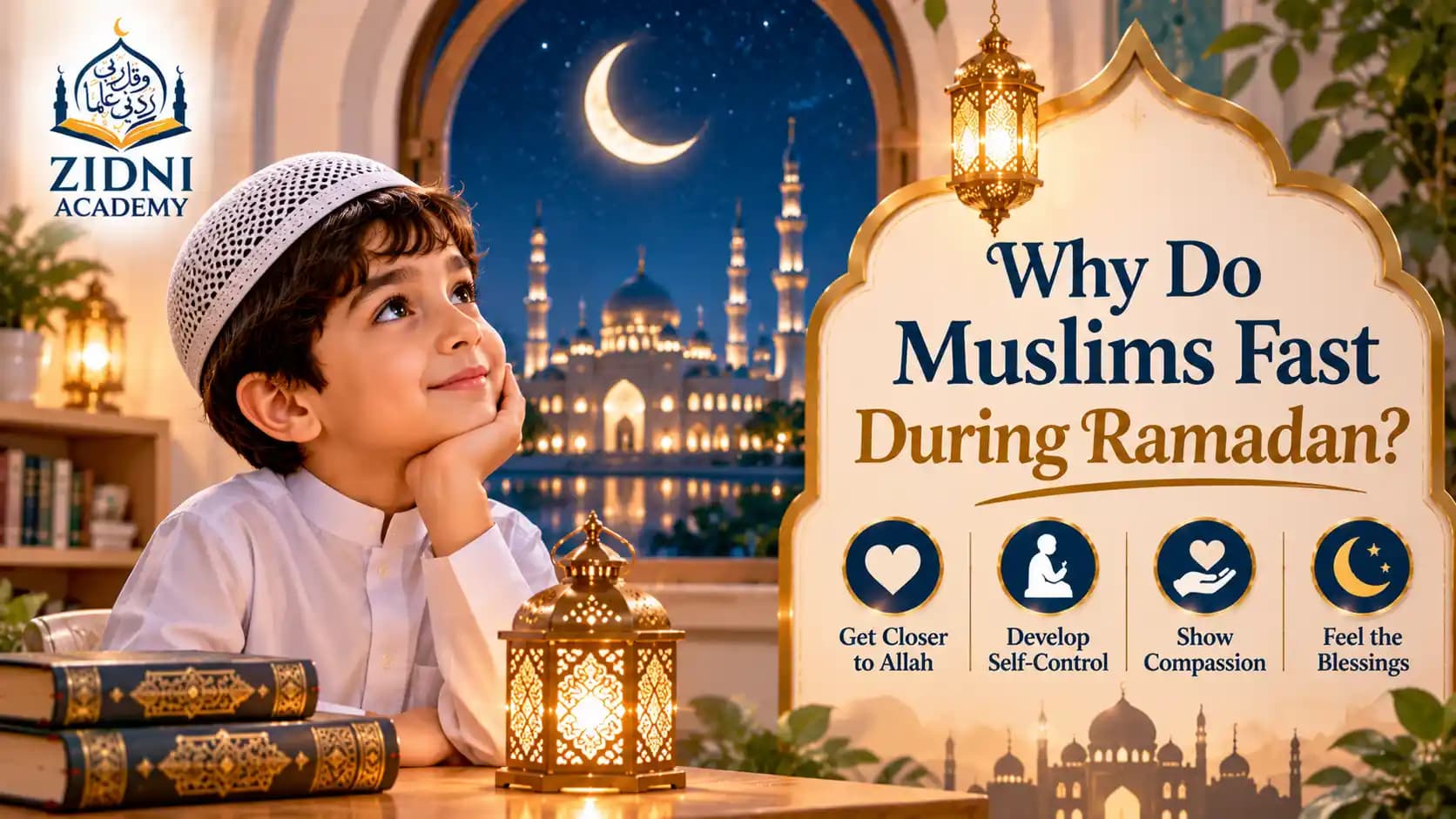
Why Do Muslims Fast During Ramadan? The Purpose, Story and Meaning Explained
Why do Muslims fast during Ramadan? Because Allah prescribed fasting in the Quran so that believers grow in God-consciousness, self-control, gratitude and compassion. For one lunar month, Muslims who are able abstain from food, drink and marital relations from dawn until sunset, and use the month to pray, give and recite the Quran. This guide explains the purpose, the story behind Ramadan fasting, how to explain it to children, and answers to common questions. Ramadan 2027 is expected to begin around 8 February 2027.
Quick answer: Muslims fast during Ramadan because Allah commanded it in the Quran (2:183 to 185). The purpose is taqwa, which means God-consciousness, along with self-discipline, gratitude and compassion for the poor. Fasting is one of the five pillars of Islam.
What Is the Purpose of Ramadan Fasting?
The first reason is obedience: Muslims fast because Allah commanded it. Allah says, "O you who believe, fasting is prescribed for you as it was prescribed for those before you, so that you may attain taqwa" (Quran 2:183). Beyond obedience, fasting trains the believer in:
- Taqwa: staying aware of Allah in private and in public.
- Self-discipline: controlling hunger, temper and speech.
- Gratitude: valuing food and water, which are easy to take for granted.
- Compassion: feeling the hunger of people who struggle every day.
- Forgiveness: the Prophet ﷺ said that whoever fasts Ramadan with faith and hope for reward will have past sins forgiven (Sahih al-Bukhari 38).
Why Do Muslims Fast? Five Core Reasons
Why Do We Fast in Ramadan? Worship and Obedience
Fasting is one of the five pillars of Islam. Read more in our guide to the five pillars of the Muslim faith. Muslims fast first as an act of worship, whether or not they feel an immediate benefit.
Ramadan: Why Do They Fast? The View from Outside
If you are not Muslim, think of Ramadan as a month of spiritual training. Muslims give up food and drink in daylight, and they also try to give up gossip, anger and bad habits. The Prophet ﷺ said fasting is a shield (Sahih al-Bukhari 1894).
Why Do Muslims Do Ramadan? The Month of the Quran
Ramadan is the month in which the Quran was revealed (Quran 2:185). That is why Muslims recite more Quran, pray Taraweeh at night and seek Laylat al-Qadr, which is better than a thousand months (Quran 97:3). If you are new to Islam, our beginner Islamic classes explain the basics in simple English.
Empathy and Charity
Hunger makes the believer think of the poor. The Prophet ﷺ was the most generous of people, and most generous in Ramadan (Sahih al-Bukhari 6). Many Muslims give more charity and feed others at iftar.
Self-Control and Better Character
The Prophet ﷺ said that whoever does not give up false speech and acting on it, Allah has no need for him to give up food and drink (Sahih al-Bukhari 1903). The fast is meant to improve behaviour, not only to empty the stomach.
What Is the Story Behind Ramadan Fasting?
Fasting was prescribed for earlier nations as well (Quran 2:183). For the Muslim community, Ramadan fasting became obligatory in the second year after the Hijrah, according to most historians. The month itself was already special, because the Quran began to be revealed in it (Quran 2:185).
The Prophet ﷺ used to meet Jibril every night in Ramadan to review the Quran (Sahih al-Bukhari 6). This is why many Muslims make Ramadan a month of reciting and studying the Quran.
What Does Fasting in Ramadan Involve?
- Time: From dawn (Fajr) until sunset (Maghrib).
- What is avoided: Food, drink and marital relations during the fasting hours.
- Meals: Suhoor before dawn and iftar at sunset.
- Who is exempt: Children before puberty, the sick, travellers, the elderly, pregnant or breastfeeding women when fasting is harmful, and women during their periods. Some make up missed days later, and some give fidyah.
For the detailed rules, read our guide to Ramadan fasting rules.
Why Do Muslims Fast During Ramadan for Kids?
A Simple Explanation for Children
"In Ramadan, Muslims fast to thank Allah, to learn patience, and to remember people who do not always have food. We also read more Quran, pray together and share food at iftar."
Do Children Have to Fast?
No. Fasting becomes obligatory at puberty. The Prophet ﷺ said the pen is lifted from a child until he reaches puberty (Sunan Abi Dawud 4403). Many families let children try a few hours or a few days, so they learn without strain.
Ways to Make Ramadan Meaningful for Kids
- Keep a charity jar and let your child choose where to give.
- Let kids help prepare iftar.
- Set a short daily Quran time. Our online Quran classes for kids can help children read with confidence.
- Share one story from the Prophet's life each night.
Beyond Food: What Muslims Do in Ramadan
Ramadan is a month of worship as well as fasting. Muslims pray Taraweeh, recite the Quran, give charity, break the fast with family and seek forgiveness, especially in the last ten nights. Many Muslims plan a Quran goal for the month, such as completing a recitation, improving Tajweed or revising memorized surahs.
Make This Ramadan the Month You Connect With the Quran
If you want to read the Quran better this Ramadan, a teacher helps most. At Zidni Academy, lessons are live and one-to-one. Most of our teachers are Al-Azhar graduates, and female and male teachers are available. Lessons run in your own time zone in the USA, UK, Canada, Australia and the Gulf.
Adults can start with our online Quran classes for adults.
Every plan starts with a free trial lesson, and you pay only after it.
Common Questions About Ramadan Fasting
Why Do Muslims Fast During Ramadan?
Because Allah commanded fasting in the Quran (2:183 to 185). It builds taqwa, self-discipline, gratitude and compassion.
Why Do Muslim Do Fasting? Why Not Drink Water?
The command is to abstain from food and drink from dawn to sunset. Islam also removes hardship: the sick, travellers, the elderly and others have exemptions, and no one is asked to harm themselves.
What Is the Purpose of Ramadan Fasting?
It is an act of worship that develops taqwa, self-control, gratitude and compassion.
How Can I Read the Quran Better During Ramadan?
Recite a little every day, listen to a clear reciter and ask a teacher to correct you live. If your Tajweed needs work, a structured Tajweed course helps you fix mistakes before Taraweeh.
What Is the Story Behind Ramadan Fasting?
Fasting was prescribed for earlier nations too, and Ramadan became obligatory for Muslims in the second year after the Hijrah. It is the month in which the Quran began to be revealed.
Can I Kiss My Girlfriend in Ramadan?
Islam teaches that physical relationships belong within marriage, at all times of the year. For a married couple, a kiss is permissible during fasting if it does not lead to intercourse, as reported of the Prophet ﷺ (Sahih al-Bukhari 1927). Intercourse during fasting hours breaks the fast and requires expiation. Muslims in an unmarried relationship are encouraged to keep proper boundaries, consider marriage and ask a trusted scholar for guidance.
What Happens When a Girl Gets Her Period During Ramadan?
She does not fast on those days, and this is not a sin. She makes up the missed days later (Sahih Muslim 335). She can still make dua, remember Allah, give charity and join in the spirit of Ramadan.
Do Children Have to Fast in Ramadan?
No. Fasting becomes obligatory at puberty, and children can practise with shorter fasts.
When Does Ramadan 2027 Start?
Ramadan 2027 is expected to begin around 8 February 2027, and in some countries on 9 February, depending on moon sighting. Follow your local announcement.
Start Your Ramadan Quran Journey with a Free Trial Lesson
Understanding why Muslims fast during Ramadan is the first step. Making the month meaningful with the Quran is the next. At Zidni Academy, you recite to a live teacher, receive correction and follow a plan that fits fasting and your time zone. Book your free trial lesson and be ready for Ramadan.